As the rounds begin, Nick Allen steps onto the mat with a simple mindset.
Just roll.
Allen, a senior theatre arts major, has spent the last two and a half years training in Brazilian Jiu Jitsu, a grappling-based martial art known for its focus on technique, leverage and discipline. While balancing rehearsals, classes and college life, Allen has developed a routine centered around training, humility and persistence.
What began as curiosity sparked by friends quickly turned into a long-term commitment.

Allen says he originally had little interest in the sport. Two of his friends, both already experienced, kept encouraging him to try it.
“My friend, he’s a higher belt, he has his own gym now,” Allen says. “They were talking to me about it, but I was never interested at first because I was kind of scared. But yeah, I got into it because of my friends.”
Since then, the mat has become a consistent part of his life. During his first year and a half training, Allen attended regularly. College life eventually made scheduling more complicated, especially with his gym located in Fairfield.
“It’s hard when you’re in college full-time,” Allen says. “It takes time commitment and mainly consistency.”
Training requires discipline and structure. Allen balances martial arts with strength training throughout the week. His schedule follows a rhythm.
“I lift Monday, Wednesdays and Fridays,” Allen says. “And I go to the gym Tuesdays and Thursdays and Sundays.”
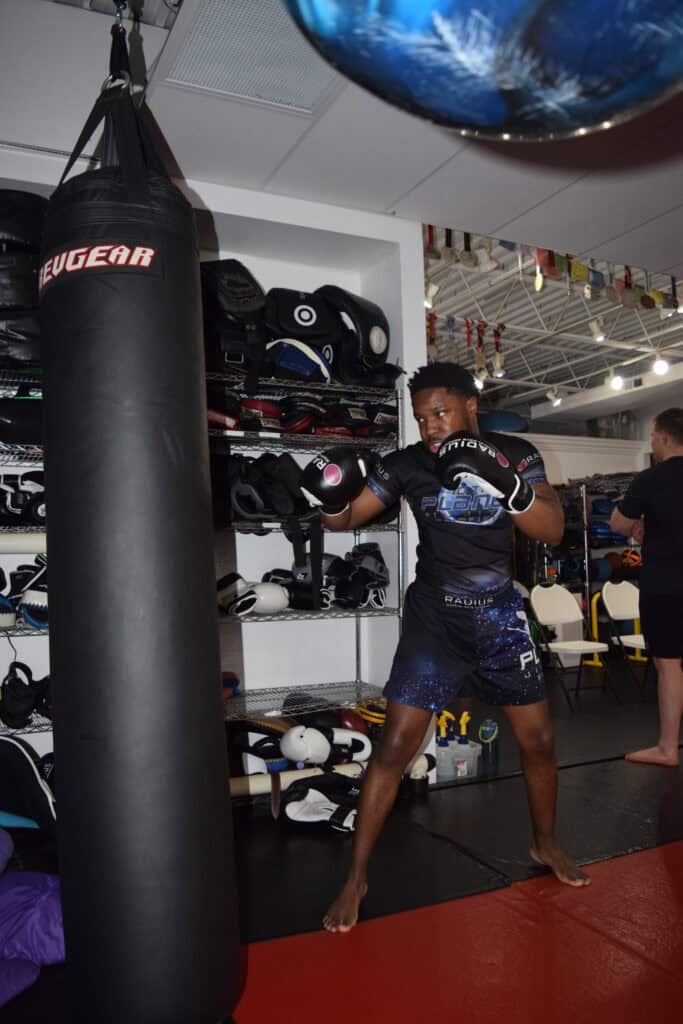
When he does train, sessions are intense and structured. A typical day at the gym begins with Muay Thai kickboxing before transitioning to grappling.
“We do kickboxing first, a specific one called Muay Thai,” Allen says. “Then we have about a 15-minute relaxation and then we go into jiu jitsu.”
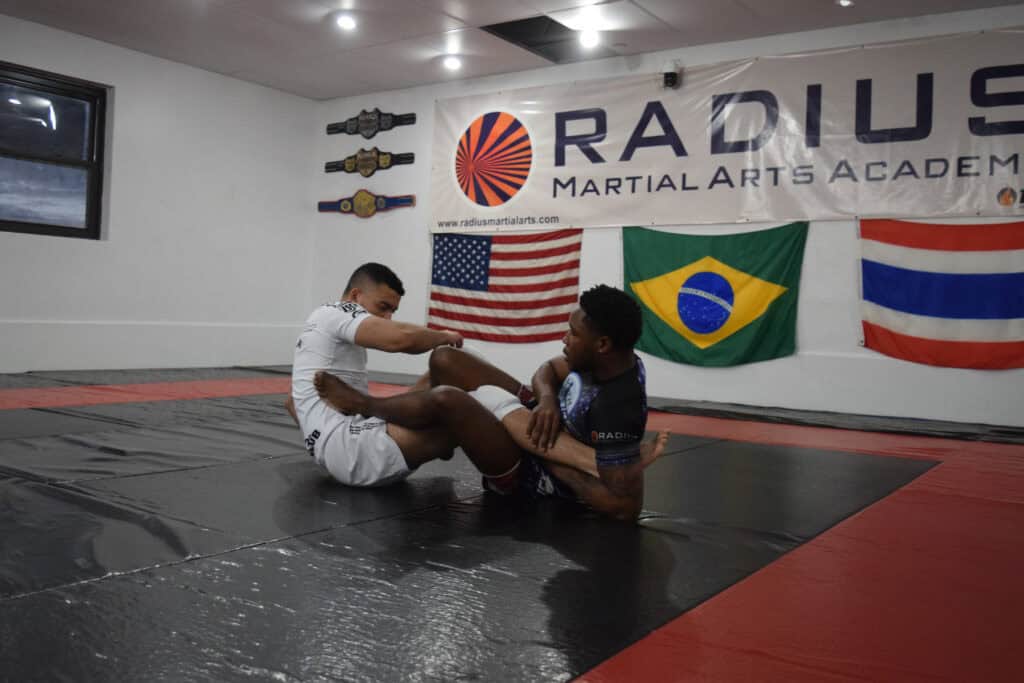
The jiu jitsu portion starts with drilling techniques before moving into live sparring rounds, commonly called “rolling.”
“We drill techniques first, then we do rolls,” Allen says. “Rolling is like live rounds where you go with somebody for about five minutes.”
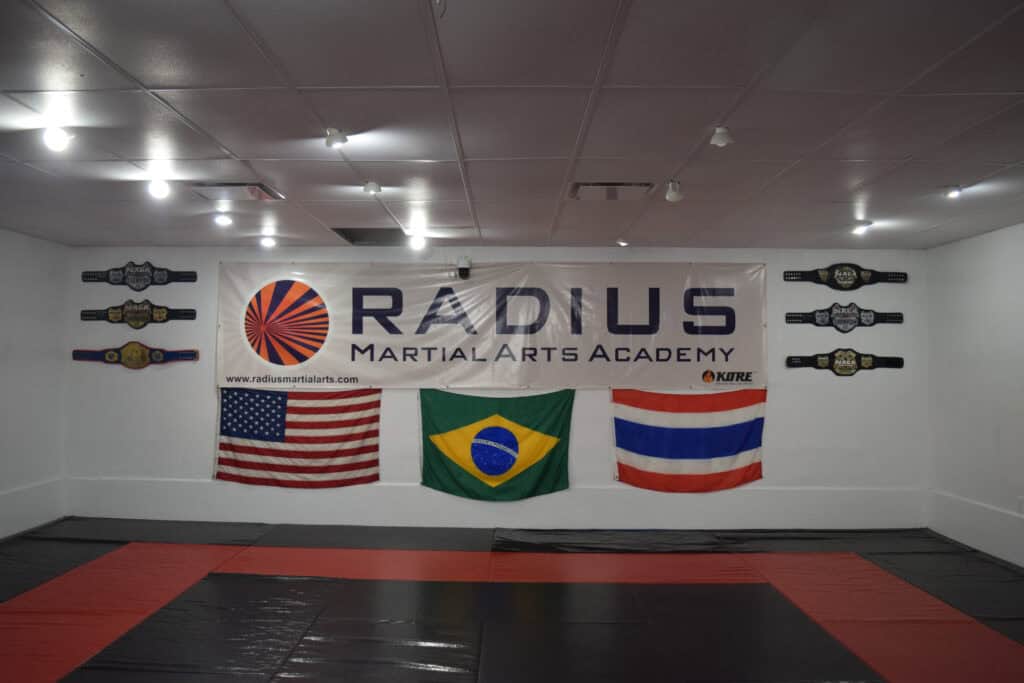
During those rounds, training partners test their skills against each other repeatedly.
“We get about ten rounds in,” Allen says.
Allen currently holds a blue belt with one stripe, an early but significant milestone in Brazilian Jiu Jitsu. Unlike many martial arts, belt promotions are rare and require years of progress.
“First off, they go by level of consistency,” Allen says. “How well do you know what you’re doing? Can you do it on others and teach them?”
Instructors also evaluate how well students follow instructions, perform techniques and apply their knowledge in live training.
“They look at if you can do the technique correctly,” Allen says. “You can know the technique but not how to do it in a manner that’s effective.”
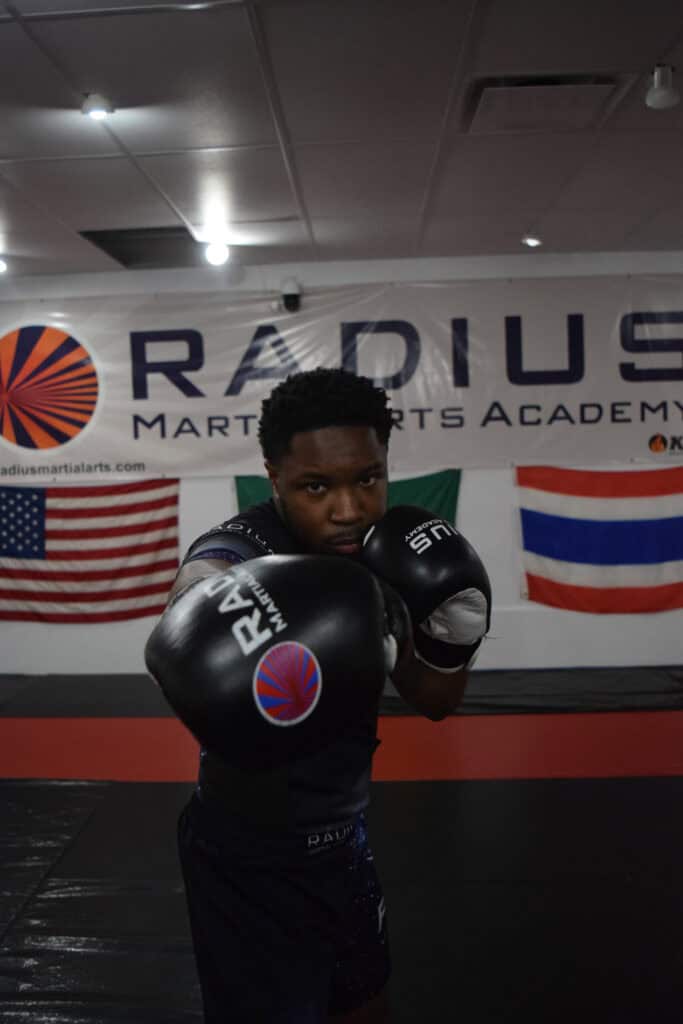
As practitioners advance through higher ranks, the details become increasingly important.
“The closer you are to getting a black belt, the harder it is,” Allen says. “It’s all small details, positioning, small levels of technique.”
Allen primarily trains in a style known as No-Gi Jiu-jitsu, which is practiced without a traditional uniform.
“No-Gi is practice without the gi, without the uniform,” Allen says. “I never put on the gear before, so I’m really a No-Gi specialist.”
While he continues to train regularly, Allen has also tested his skills in competition. He has competed in two tournaments organized by groups like NAGA and Grappling Industries.
Tournament preparation involves strategy as much as technique.
“You have to know the rule set,” Allen says. “Are you playing with points? Is it submission only? Is it best out of three?”
Training camps often involve drilling specific situations that might occur during matches.
“They’ll put you in situations they think you might get in and drill,” Allen says.
Competition days can be nerve-racking, especially because fighters usually meet their opponents for the first time at the event.
“You don’t know how these guys look,” Allen says. “You pull up, you check in, and the guy might be right behind you checking in for the same weight class.”
Despite the nerves, Allen believes mindset plays a major role in competition.
“You just gotta have fun,” Allen says. “You might lose. You just can’t think about it. Just roll. Act like it’s another day.”
That mindset comes from confidence built in the training room.
“If you were locked in during training, you’ll know you’re good,” Allen says.
The culture inside a jiu jitsu gym also plays a major role in development. Unlike many competitive environments, Allen says ego is discouraged.
“You’re gonna get submitted,” Allen says. “I’m gonna lose to somebody and be like, ‘Bro, how did I lose to him?’”
Instead of focusing on status, teammates help each other improve.
“The biggest thing is having no ego,” Allen says. “Everybody is trying to see each other win.”
That environment has helped Allen develop a new perspective on discipline and humility.
“I’ve developed that over the years,” Allen says. “Even if I lose to a 12-year-old, I’m chilling.”
Despite this, pride is still an all-important emotion. One of his proudest moments came when he earned his blue belt, a major milestone in the sport. But like any athlete, he has experienced setbacks as well. During one tournament match, he made a critical mistake.
“My most disappointing moment was blanking out,” Allen says. “I gave a guy a position that he wasn’t supposed to have.”
Moments like that, he says, are part of the learning process. Looking ahead, Allen has a long-term goal that motivates him to keep training.
“I got to get my black belt,” Allen says.
Reaching that level could take more than a decade, but he views the challenge as part of the appeal.
“I know it’s hard, but it’s obtainable because I see others around me do it,” Allen says. “The ultimate goal is to obtain the black belt.”
For Allen, Jiu-jitsu is not just about fighting. It is about patience, discipline and growth.
His advice to newcomers is simple.
“Have patience. No ego,” Allen says. “Just show up and do the work.”