The Hamden Transition Academy is currently helping 21 young adults with disabilities take meaningful steps toward independence through a partnership between Hamden Public Schools and the university.
Primarily located in Davis Hall, the program serves students ages 18 to 22 who have completed high school requirements but benefit from continued education focused on life skills and employment.
The HTA’s goal is to bridge the gap between high school and adulthood by equipping students with the tools needed to succeed beyond the school system.
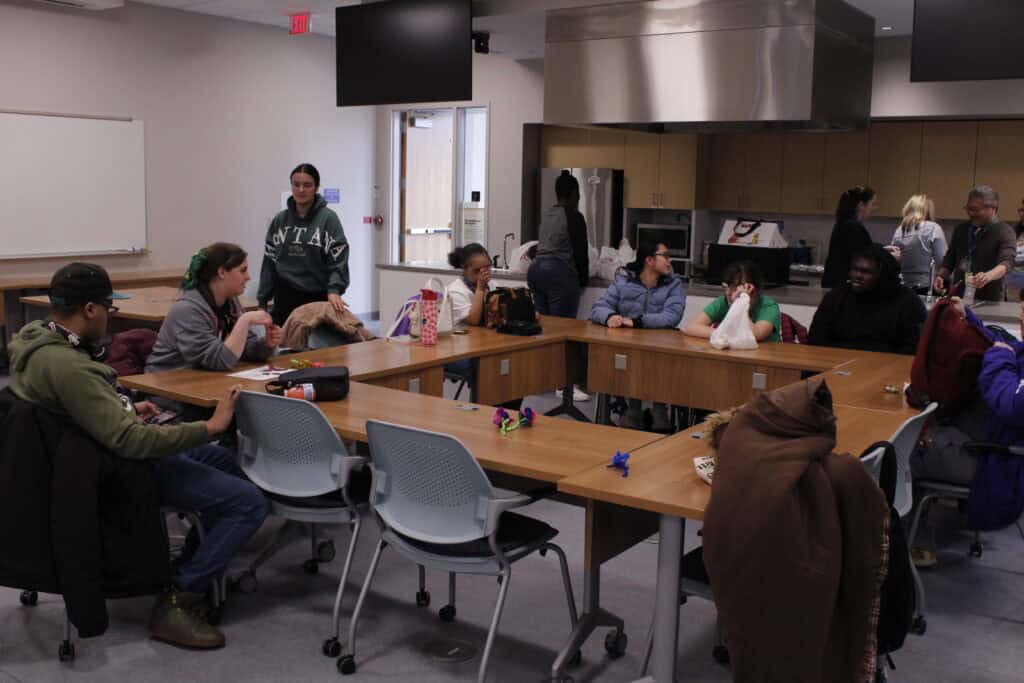
Students follow individualized schedules combining classroom instruction, work experience and community engagement, with lessons focused on practical skills such as budgeting, communication, job readiness and daily living.
The program’s location on a university campus allows students to interact with college student mentors and participate in collaborative programs with university departments.
One of those mentors is Aizea Costa, a junior general studies major, who works closely with students in the academy.
“I wanted to be a mentor because I naturally have always had a way of connecting with people who have some form of disability,” Costa says.
Costa assists students throughout the week during lunch and activity periods.
“I am with them Monday through Thursday for an hour from 11:30 to 12:30, and on Fridays I am with them for two hours from 11:30 to 1:30,” Costa says. “It almost feels like a breath of fresh air when [I’m with them,]” Costa says.
Costa works alongside other mentors who share the goal of helping students grow more independent, whether by assisting with tasks, guiding activities, or providing social support.
“My goal is to help students grow and gain independence to the best of their abilities,” Costa says.
For some students, the transition academy experience continues even after they leave the program.
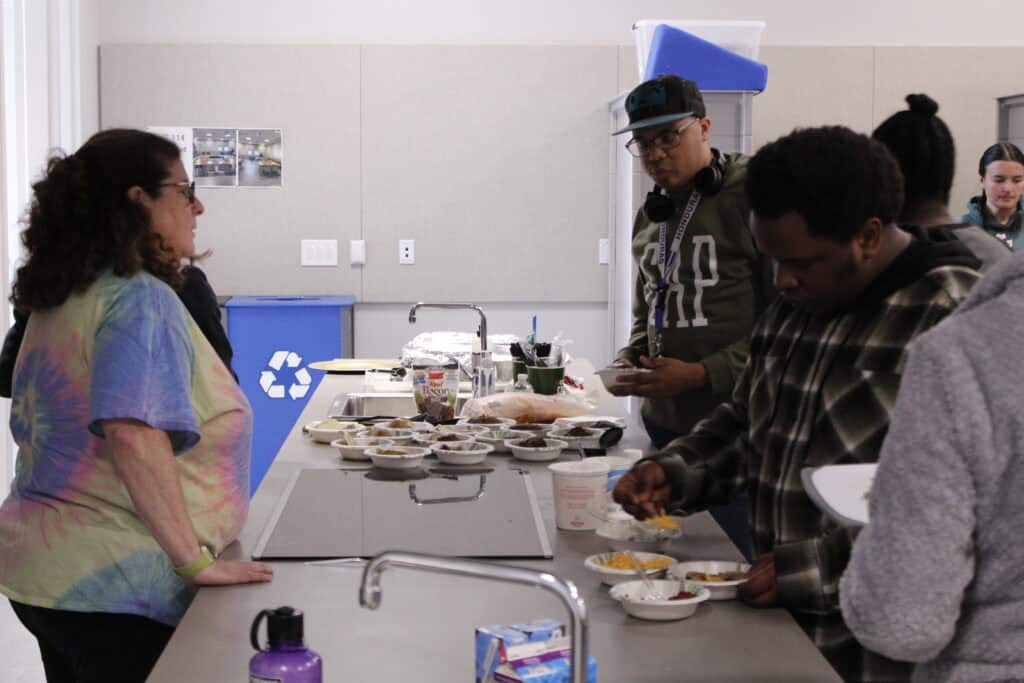
Arcadia So is now a sophomore journalism major, but just a few years ago, she was a student in the HTA, navigating many of the same challenges current students face.
She spent three years in the HTA, from August 2019 to October 2022, before continuing into an adult service employment program called Lumibility. After two years there, she transitioned to college, becoming the second generation in her family to attend Southern after her mother earned her master’s degree at the university.
“HTA was a really important part of my journey,” So says. “It helped me figure out what I wanted to do and gave me a foundation before moving on.”
Now balancing coursework and college responsibilities, So says one lesson from HTA continues to shape her daily routine.
“Time management is probably the biggest thing I took away from HTA,” So says. “That’s something I use all the time now with my classes.”
Hamden Public Schools special education teacher and university adjunct professor of recreation, tourism and sport management and special education, Rikiya Uzusawa, says the academy supports students with intellectual or developmental disabilities as they prepare for employment and transition into adult services.
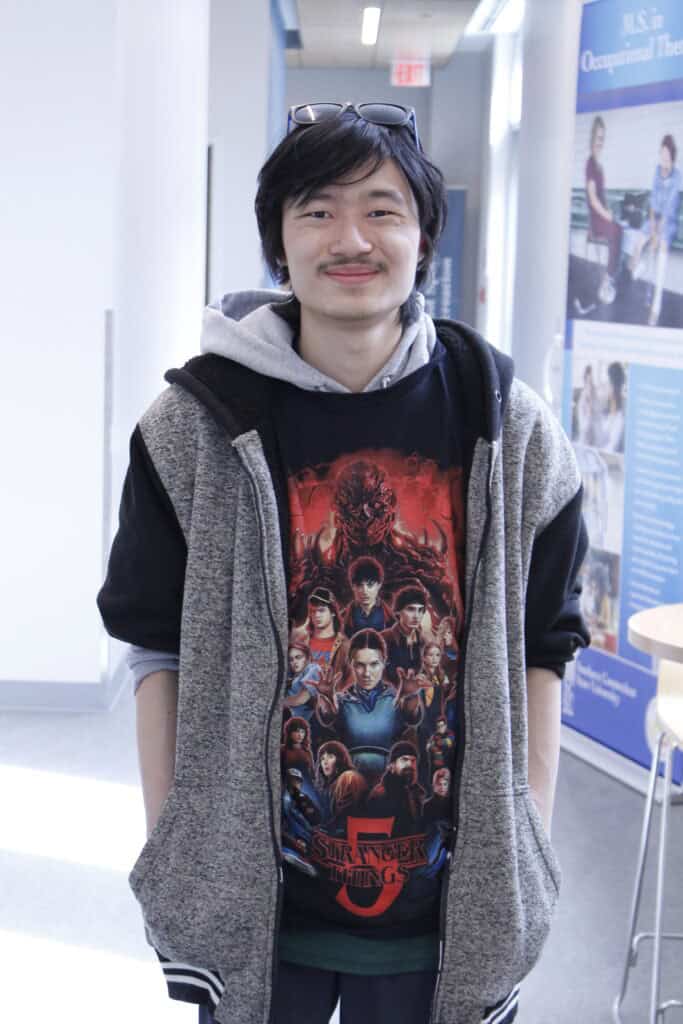
“I think the HTA is just an amazing resource for our students,” Uzusawa says. “We teach them how to basically function in life.”
Many students may receive services through agencies such as the Department of Developmental Services or the Bureau of Rehabilitation Services after leaving school. Because the program operates on a college campus, students must function in a structured environment.
“They have to be somewhat well behaved,” Uzusawa says. “We wouldn’t be able to care for a severely emotionally disturbed population because, as guests, we can’t just have students turning over classrooms.”
The academy places a strong emphasis on employment preparation.
“They have to be employable, whether that be assisted employment or competitively employable,” Uzusawa says. “They should have some level of skills so that they can work, because we are a vocational program.”
Students typically begin with on-campus jobs before transitioning to positions in the surrounding community.
“Our vocational coordinator works with them and families,” Uzusawa says. “They start off here on campus building up their work behaviors, and once they prove that they can work, we find them an off-campus site where they receive a small stipend.”
For many students, those opportunities have become a key part of their experience.
Samuel McFadden, a current HTA student, says his favorite part of the program is spending time with friends and participating in end-of-week activities.
“I like to go on field trips and play games on Fridays,” McFadden says.
Last year, students from HTA and other transitional academies across the state participated in a Glow Dance, bringing students together with music and socializing. McFadden says this was his favorite experience in the program thus far.
“We danced like crazy for hours out on the floor,” McFadden says.
Mekhi Black Currie, another HTA student, says the program has helped him build social skills and connect with others. He also works at Burlington in Hamden Plaza, where he helps organize merchandise and clean.
“[My favorite thing I learned is] how to act in real life, and make friends,” Black Currie says.
Souta Shimizu, a current HTA student preparing to graduate, describes his time in the program as a journey filled with both highs and lows.
“It’s been all right,” Shimizu says. “Every year has its things. There are some great moments and some down moments. It’s kind of like a roller coaster of a journey.”
Despite those challenges, Shimizu says he values the opportunity to gain experience outside the classroom.
“I really enjoyed working off campus a lot,” Shimizu says. “It’s been a great experience. I’m really grateful for it, especially with how the economy has been.”
Shimizu says the experience helped him grow personally, teaching him to take things one step at a time, build confidence from within and better appreciate what he has.
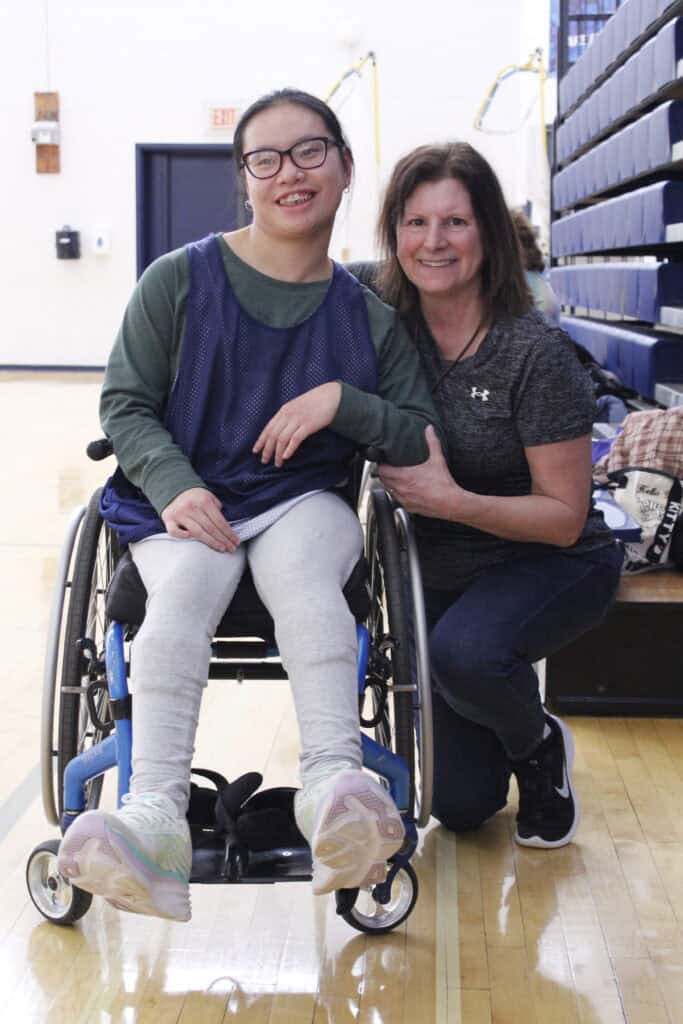
Paraprofessional Amy Young says the program emphasizes real-world learning that students can carry into adulthood.
“I have my own child who is on the autism spectrum, and so that’s what got me into becoming a para,” Young says. “I started as a para as a one-on-one to a child with autism, and then I love this age group, and I love the program. I love what’s behind it. I love how they’re learning life skills and real-life things.”
Young says each day centers on encouragement and support.
“Every day is so different, [but it always] comes back to just a lot of positive encouragement for the students, a lot of telling them there’s nothing they can’t do. They can do anything that they set their minds to.”
Students regularly practice everyday tasks that build independence.
“We work on a lot of math and shopping. We do a lot of budgeting. We do laundry, we do a lot of health care,” Young says. “Even as far as setting the table, washing the floors, sweeping the floors, making the beds, changing the sheets.”
Young says that students build a wide range of everyday life skills, from managing money and shopping to handling household responsibilities like cleaning, doing laundry and basic healthcare tasks.
“You can tell they’ve improved because now they’re making their own lunches or making their own dinners at home,” she says. “There’s just so many great qualities about what they improve on during the time of the program.”
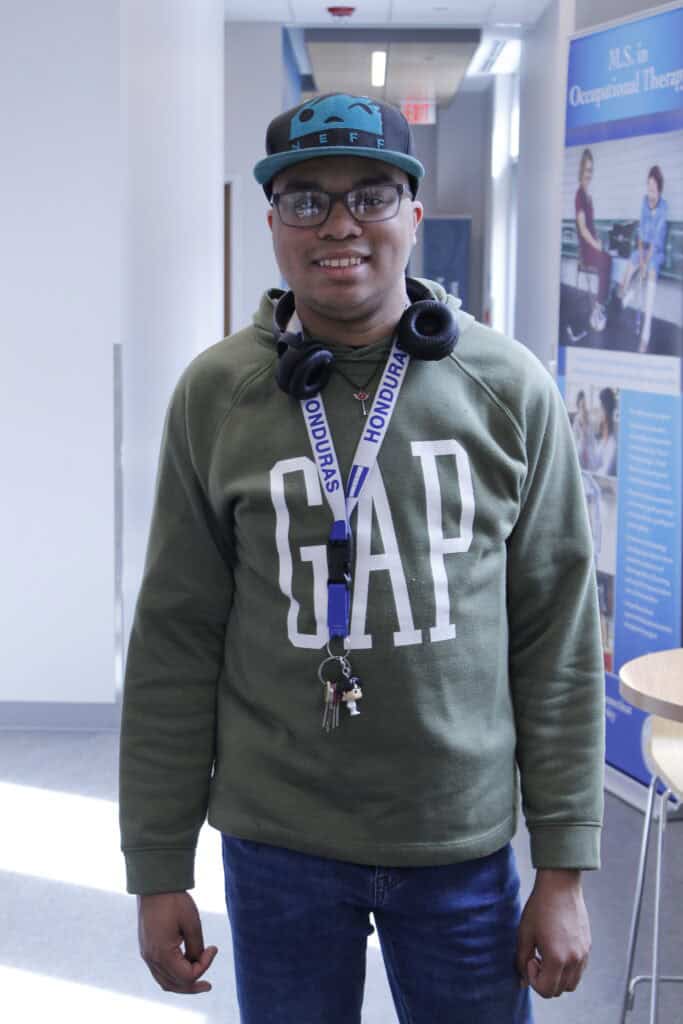
A typical day reflects a balance between structure and flexibility. Students arrive around 8 a.m., begin with breakfast and move into seminars or individualized instruction before transitioning into job placements or IEP-based work.
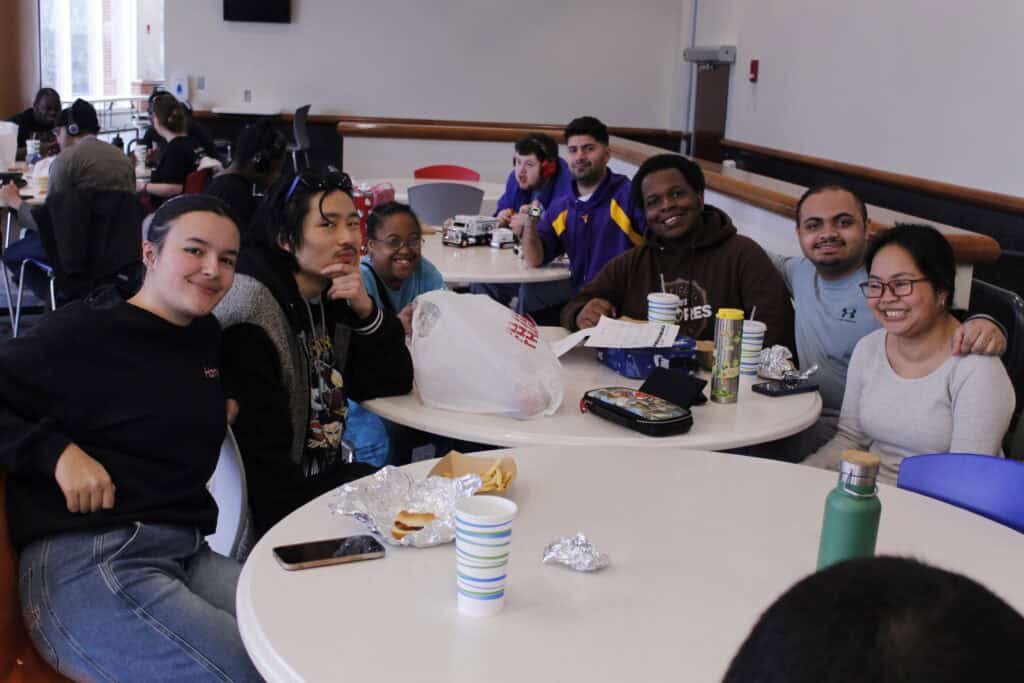
Lunch takes place at the Adanti Student Center, where they interact with the broader campus community.
In the afternoons, students participate in collaborative programs with university departments, including adaptive physical education and music therapy sessions.
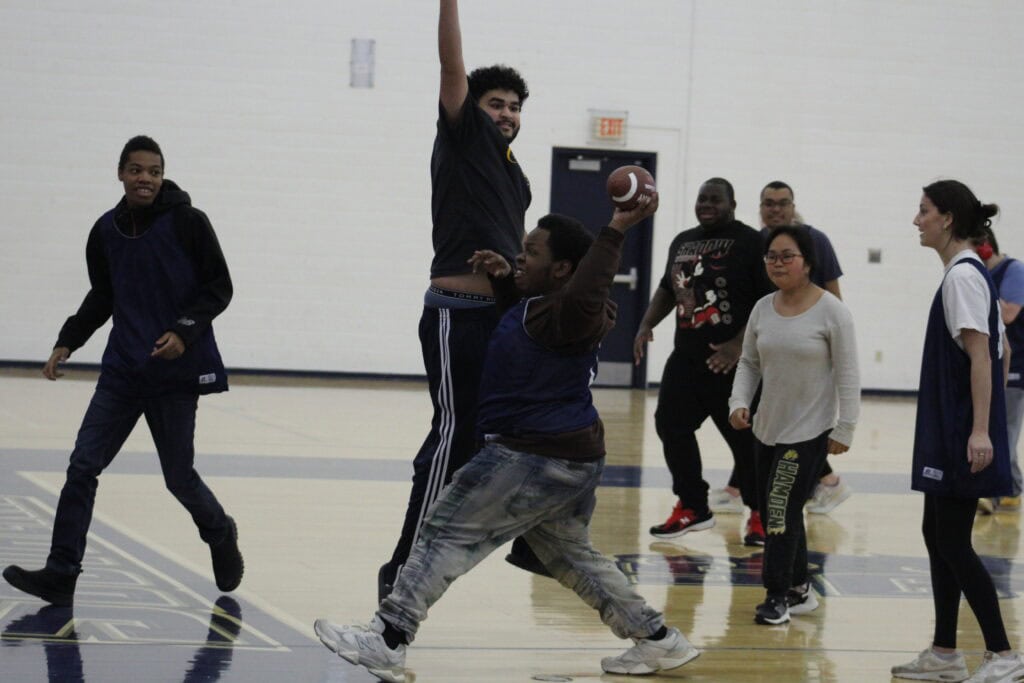
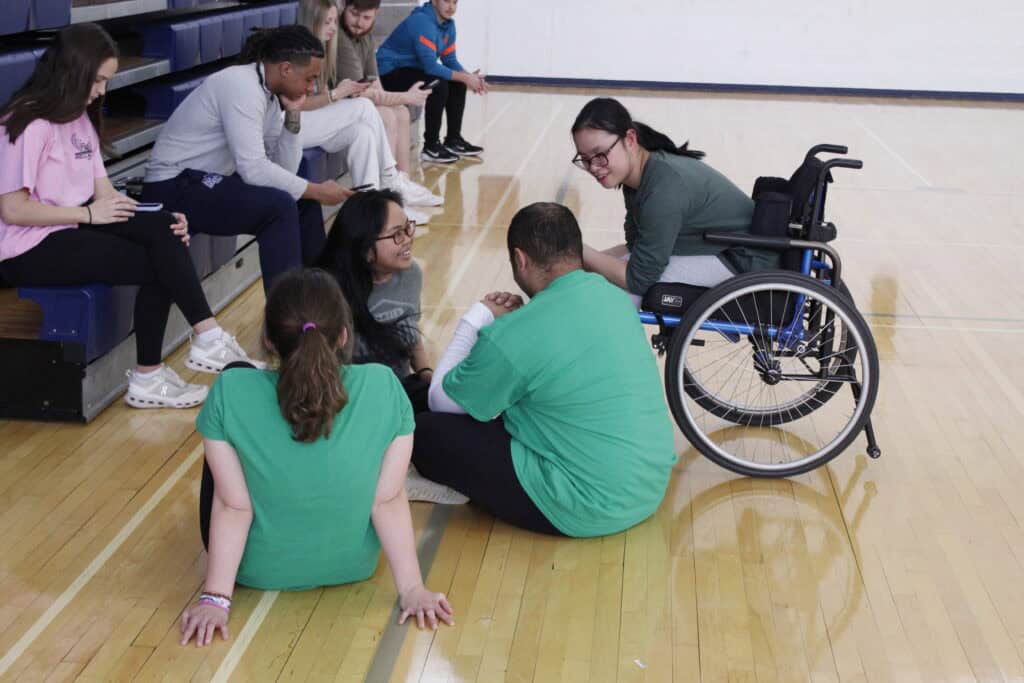
On Fridays, they take part in recreational programming with university students, building teamwork and social skills.
These sessions take place in Pelz Gymnasium and are led by Michael Dodge, a professor in the department of recreation, tourism and sport management.
Dodge says that Rec 220 is consistently available each semester, and he sometimes also teaches Sport Management 207, an adaptive sports course where his students engage with Hamden students by introducing them to different sports.
“It’s [been] wonderful,” he says. “The students fill out course evaluations at the end of the semester, and almost every student [says] that this lab setting is the most beneficial part of the class.”
After completing the program, staff help students transition into adult service agencies or employment programs.
“We help them with agencies like DDS and BRS,” Uzusawa says. “Depending on who they’re working with, they might go to a day program or they may work with BRS to help them find a job.”
While the program provides critical support, challenges remain after graduation.
“The sad thing is there’s not enough programs for once they graduate to help them in the real world,” Young says.