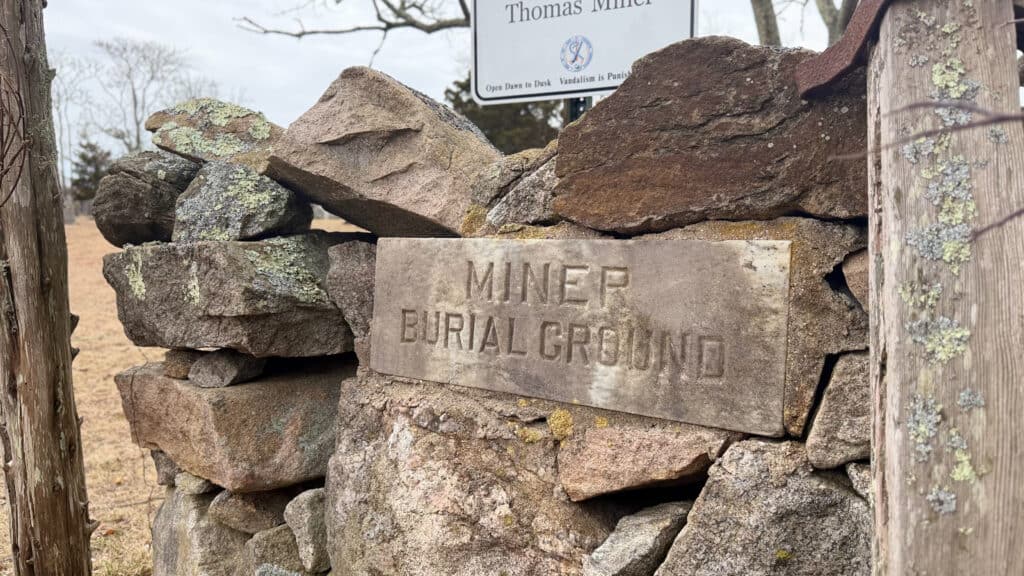
ust after sunrise, before the grounds fill with visitors, Will Fyke is already at work in the Thomas Miner Cemetery, crouched beside a gravestone many might walk past without noticing.
The inscription on the stone is barely visible, softened over the decades from weathering.
But with each careful pass of a brush, removing lichen and other marks, letters begin to take shape again.
A name.
A date.
A symbol carved into the stone.
Proof of a life lived long ago.
For some, cemeteries are places of quiet remembrance.
For Fyke, a junior history major and Stonington Cemetery Commission vice chairman, they are a living record waiting to be preserved.
Created in February 2024 by a townwide vote, the commission is responsible for maintaining, documenting and protecting Stonington’s historic burial grounds.
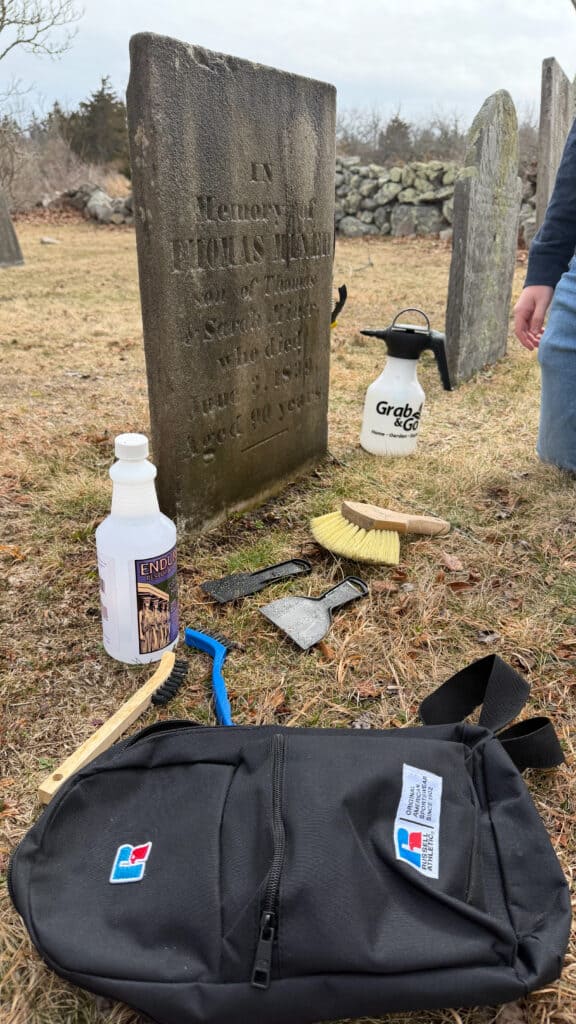
“We oversee about 45 of the 67 known cemeteries in town,” Fyke says. “Our job is to make sure these places—some dating back to the 1600s—are respectfully cared for, and that their stories aren’t lost.”
Altogether, the commission oversees roughly 9,000 documented graves, though Fyke estimates the number likely exceeds 10,000 when unmarked burials are considered.
The commission has five members and two alternates, each with different responsibilities. Fyke, the youngest member, handles outreach through social media, keeping the community informed about cleanups, restoration efforts and the stories behind the stones.
“They gave that to me because I’m the youngest, and I’m at college most of the time. But it works.”
As a college student living in New Haven, Fyke often travels more than an hour back to Stonington for meetings, cleanups and public events.
Monthly meetings are scheduled carefully around his classes. Budget hearings can stretch late into the night, sometimes ending at 11 p.m. or later.
“It’s a challenge,” he says. “Being part of town government while living somewhere else.”
Balancing that mission with everyday life is not always easy.
June Froh, commission member, who has worked with Fyke for years, says his dedication stands out.
“Will is a remarkable young man with a thirst for history, especially that of his hometown, Stonington,” Froh says. “I have worked with him for five years at Historic Stonington, and I am constantly impressed with his recall of historical facts that he shares enthusiastically with visitors.”
His path to the role was not something he had always planned.
“My aunt, who’s a teacher in Stonington, told me they were forming a new commission and that I should apply,” Fyke says. “It was the first time I’d really thought about getting involved in local government.”
It was his freshman year when the opportunity came; he drove more than an hour back home one night to attend a public interview before the Stonington Board of Selectmen.
“It was nerve-racking,” he says. “But once I started talking about how preservation isn’t a one-time thing, that it’s something each generation has to carry forward, it just felt right.”
Weeks later, he received a letter confirming his appointment.
“That morning, I became an official member of the commission,” Fyke says. “And since then, I’ve been attending monthly meetings.”
The scope of the work quickly became clear.
Stonington’s cemeteries are not all neatly maintained or easily accessible. Some are large, public spaces. Others are small, isolated plots hidden in the woods, tucked behind homes, or located along narrow trails.
“Many people—Black, Indigenous, children, the poor—were buried without proper markers,” he says. “So, even when we restore one visible headstone, we know there are many more stories beneath the surface.”
That reality shapes the way Fyke approaches the work.
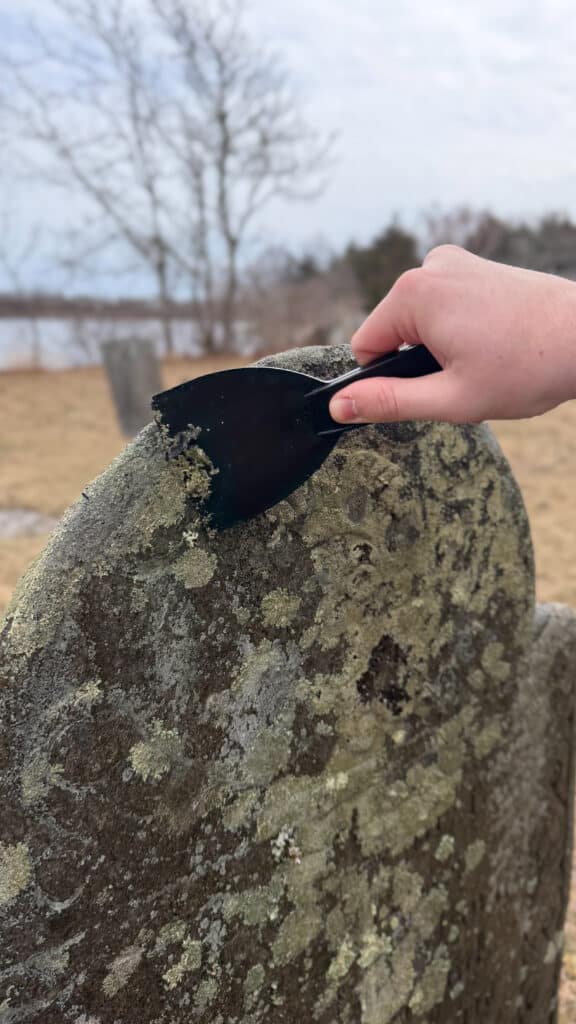
When he arrives at a cleanup, the first step is not to immediately begin scrubbing stones. Instead, the group walks through the cemetery, taking stock of what needs attention.
Some graves may be leaning or damaged. Others are covered in moss or dirt, their inscriptions nearly impossible to read.
“You assess what is needed,” he says. “What can we realistically do that day.”
Only then does the cleaning begin.
Fyke says there is a rhythm to cleaning and restoring graves; one that is both physical and, in many ways, meditative.
Brushes move steadily across stone surfaces.
Dirt loosens.
Letters begin to emerge.
The sound is subtle but distinct, a soft scraping that fills the otherwise quiet space.
“I love the sound of it,” Fyke says. “The way the brush moves across the stone. It’s relaxing. Every stroke is making a difference.”
The time it takes to clean a stone can vary widely. Smaller markers, especially those belonging to children, might take only a few minutes.
Larger, more detailed headstones can take significantly longer.
In some cases, Fyke uses a method known as “spray and walk away,” where a cleaning solution is applied and left for the elements to gradually do the work over time.
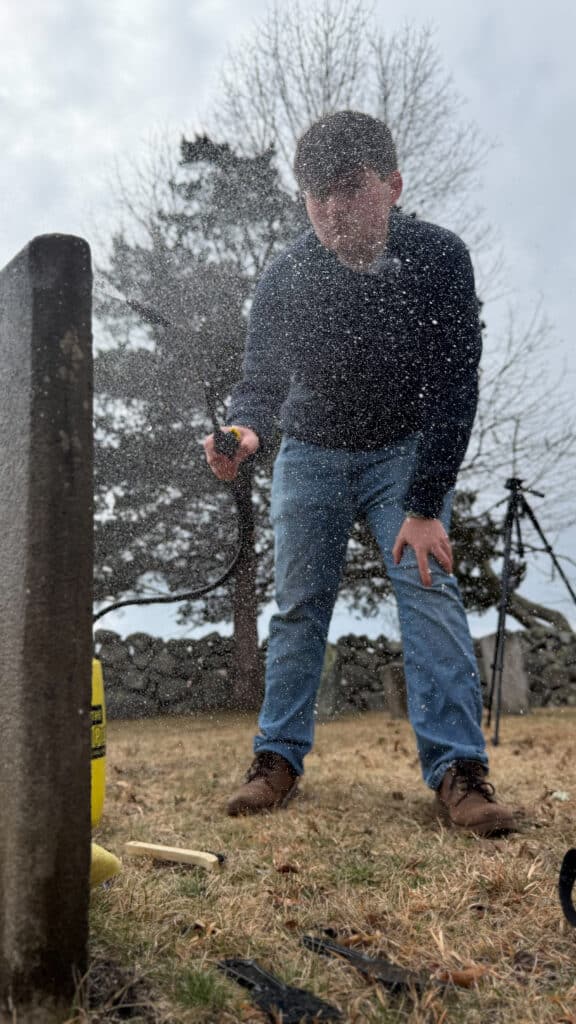
But for him, the hands-on process matters.
“[Cleaning and restoring] creates a connection for me,” Fyke says.
Often, when he begins cleaning a gravestone, he has no idea who the person was, since the inscription might be faded or partially buried. Other times, the entire stone is unreadable at first glance.
“I like to imagine who they were, based on what I can see about how the stone looks, the size, materials used,” Fyke says.
As the dirt clears, details begin to take shape. Each element offers a clue. But the real discovery comes later.
After each cleanup, Fyke makes it a point to research the individuals whose graves he has worked on.
His laptop is filled with bookmarked historical sources such as town history, genealogical records and archived documents that help piece together the lives behind the names.
He often begins with a comprehensive 1901 history of Stonington, a text that combines narrative history with detailed family genealogies.
From there, he cross-references other sources, including a town chronology and a book documenting historic homes and graveyard inscriptions.
“It’s a combination of online sources and going in person to places like the historical society,” he says. “I try to be as thorough [with my research] as possible.”
That effort, he believes, is what transforms the work from maintenance into storytelling.
“This is my one chance to tell a story that maybe hasn’t been told in decades or even centuries,” he says.
One of the most striking examples of that came during a routine mapping project in a wooded cemetery.
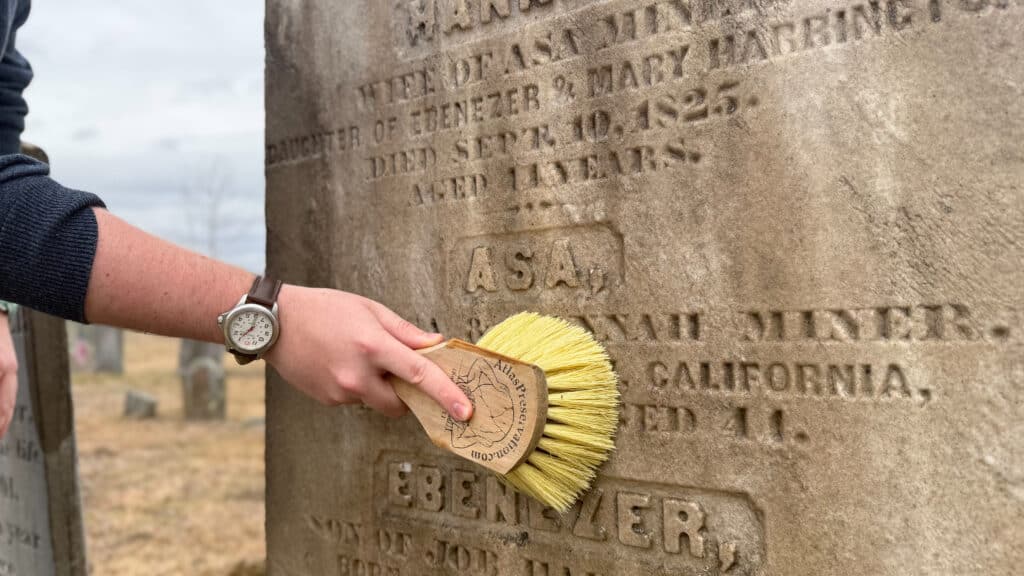
Fyke and Froh, were documenting graves, measuring plots, recording locations and noting inscriptions.
They knew there were around a dozen graves in the area, but one was missing. They had a clue: a footstone marked with initials that suggested it belonged to a man named Capt. Jesse Beebe.
After hours of work, they were preparing to leave.
Then Fyke stepped on something unusual beneath the leaves and soil.
“I looked down and thought I saw a name,” he says. “I said, ‘I think this says Beebe.’”
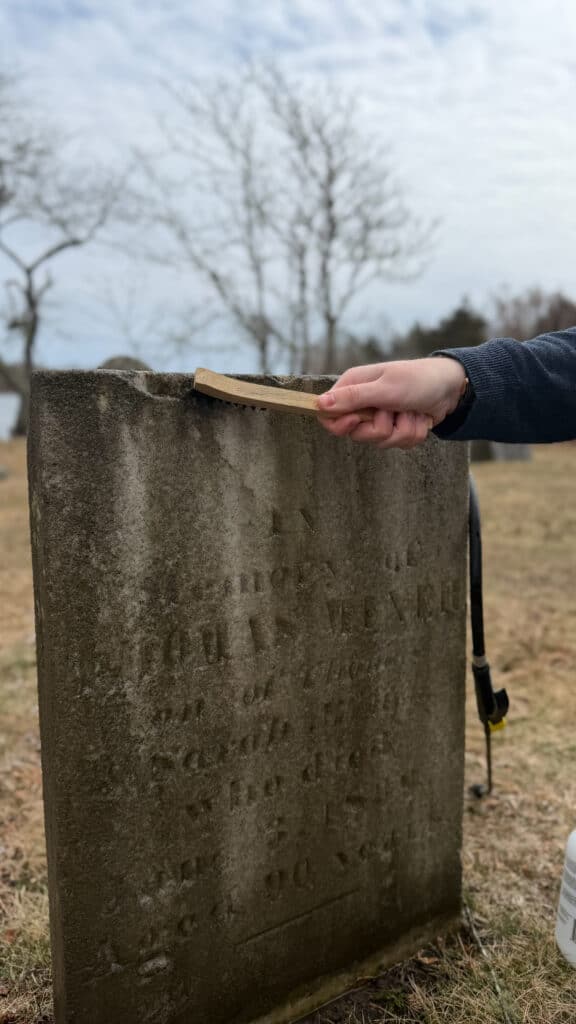
Carefully, Fyke and Froh began clearing the area. At first, only faint letters appeared. But as they brushed away more dirt, the full inscription slowly revealed itself.
Froh remembers the moment just as vividly.
“We knew Capt. Jesse Beebe was buried there, but no trace of his gravesite, other than a footstone with his initials, had been recorded,” she says.
“Will noticed a spot near the graves of Jesse’s family that needed further examination, and within minutes of clearing the overgrowth, the flat stone appeared. It was a moment that true lovers of cemeteries wait for.”
The discovery did not just uncover a physical object. It revived a story.
Beebe was then a sea captain. His home in the village still bears his name.
Through further research, Fyke was able to connect the grave to the house, correcting historical records, and bringing renewed attention to a life long ago.
Fyke says moments like that are rare, but they highlight what is at stake with the work he is doing.
“If you’re not telling the stories, you’re losing them,” Fyke says.
While many communities maintain their cemeteries, not all actively share the histories tied to them. Without that effort, gravestones risk becoming just objects, Fyke says.
Fyke wants gravestones to be something more.
“Putting a story to the stone makes it someone again,” he says.
That mission extends beyond well-documented figures. In fact, some of the stories he finds most important are those that have been historically overlooked.
Individuals like Quash Williams, an enslaved man who became a respected member of his community, and Native Americans such as Cato and Plato, whose burial markers are both rare and significant.
Then there are the graves without names.
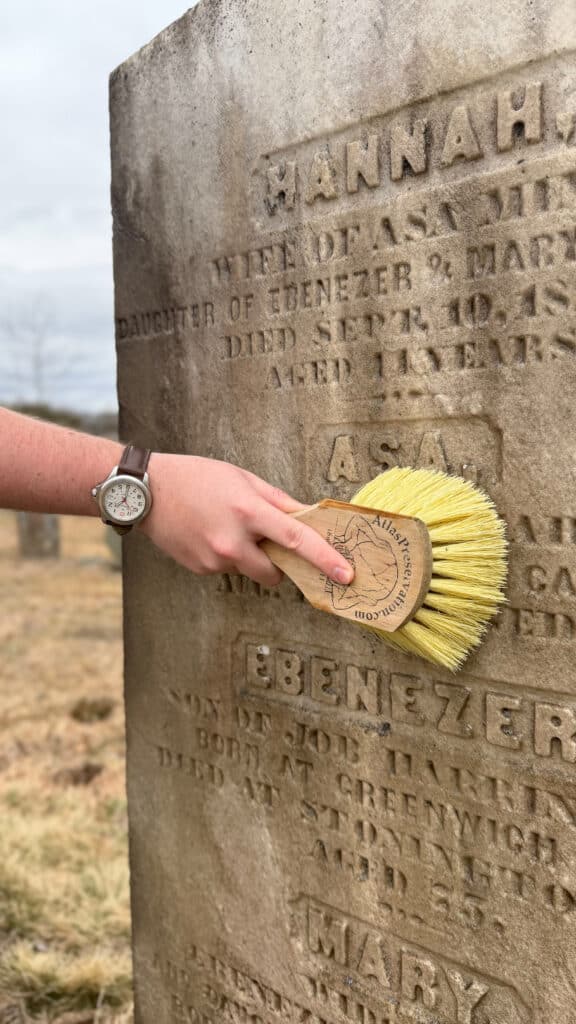
In one cemetery located on what was once a town poor farm, the dead are marked only by small, uninscribed fieldstones. These were individuals who could not afford proper headstones, Fyke says.
“I can’t tell individual stories there,” Fyke says. “But I can tell the larger story.”
The importance of that work was reinforced during a cleanup last October, when a woman approached Fyke with a message he has not forgotten.
“She said she was glad to see someone young doing this and then she quoted Ernest Hemingway: ‘Everyone dies twice—once when they are buried, and once when their name is said for the last time.’”
“That’s why I do this,” Fyke says. “To make sure those names keep being spoken.”
The commission’s work extends beyond cleanups. Members coordinate with public works, apply for grants and plan larger restoration projects.
One of the most significant efforts this spring involves the Wheeler-Bentley Cemetery, where several Revolutionary War veterans are buried.
“We applied for an $8,000 neglected cemetery grant from the state,” Fyke says. “It’s one of our biggest projects yet.”
The timing also aligns with broader historical initiatives, including preparations for the nation’s semiquincentennial celebration this summer.
Community involvement has become a key part of the commission’s success. Cleanup events regularly draw volunteers, many of whom return multiple times. Interest has grown to the point where the commission has created an email list to keep people informed and engaged.
“People want to be part of it,” Fyke says.
For him, that interest reflects a shift in how people view these spaces.
“For a long time, these cemeteries were just carved rocks people drove past,” he says. “Now they’re becoming part of our collective memory again.”
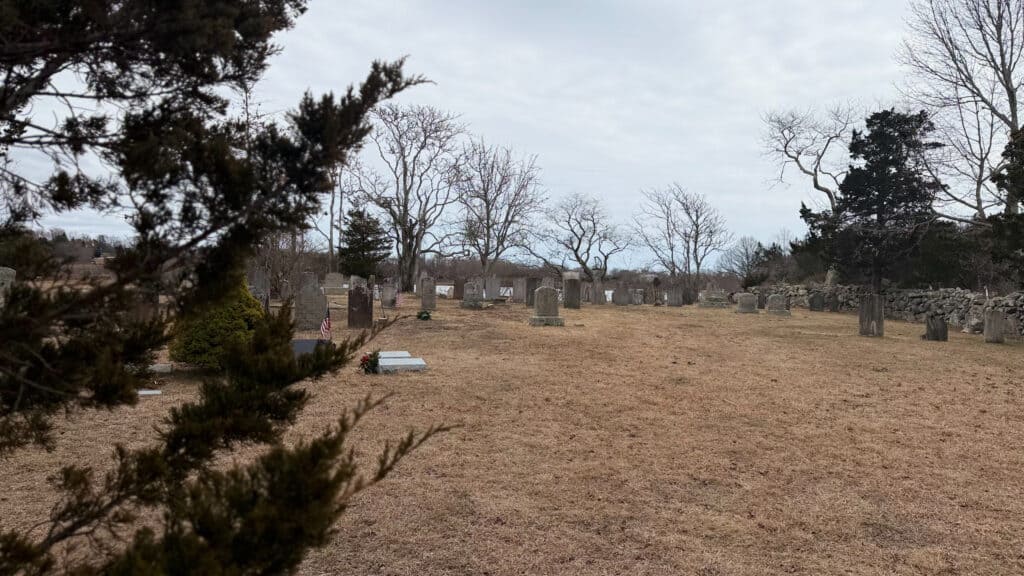
His own connection to the work has deepened over time as well.
“History feels more alive now,” he says. “These people aren’t just names in a book. You can visit where they are.”
Gravestones, in that sense, offer something unique. They are physical remnants of lives once lived, often located near homes that still stand or communities that continue to thrive.
In some cases, Fyke has stood at a grave and realized he could walk into the house that person once lived in.
“It’s a different kind of connection,” he says. “It often shapes how I see the world around me.”
Friends and family have taken notice. While some joke about his dedication, they also recognize the significance of what he is doing.
“Anyone who knows me knows this is a big part of my life,” Fyke says.
And in many ways, it has become exactly that.
Each cleanup, each restored stone, each rediscovered name adds another piece to a larger effort—one that goes beyond preservation and into something more lasting.
Because for Fyke, the goal is not just to maintain cemeteries. It is to maintain memory.
“If one person reads a post or visits a cemetery and feels connected to where they come from, then we’ve done our job.”
See video story at: crescentmagazine.org