For years, students looking to study psychology, chemistry, biology and neuroscience in one major had to work through the complicated system to build their own degree. Now, a new major fits all those interests.
Behavioral neuroscience debuted as a Bachelor of Science degree in fall 2025. It provides a major for those interested in a multidisciplinary approach to studying the brain and human behavior, says program co-director Dr. Rachel Jeffrey.
“We’re looking at the brain in a lot of different strategies,” says Jeffrey, “like a biology perspective or an anatomy perspective, a molecular perspective, a chemical perspective, a pharmaceutical perspective. But also then extending it to a behavioral perspective, emotions like human behavior as well. So it really is trying to connect how our brains work, to how we exhibit the workings of our brain.”
This interdisciplinary approach to studying the brain is what drew senior Kani Abdullah to change her major to behavioral neuroscience. Before it was offered, she took the route that many of the approximately 10 current majors did and combined several sciences.
“I was doing a major in Psychology and two minors in biology and chemistry, because I wanted to emulate behavioral neuroscience. I didn’t think Southern would have it, and that was my interest. So then when I found out it was becoming a thing, it was very seamless. I just switched right into it last semester,” says Abdullah.
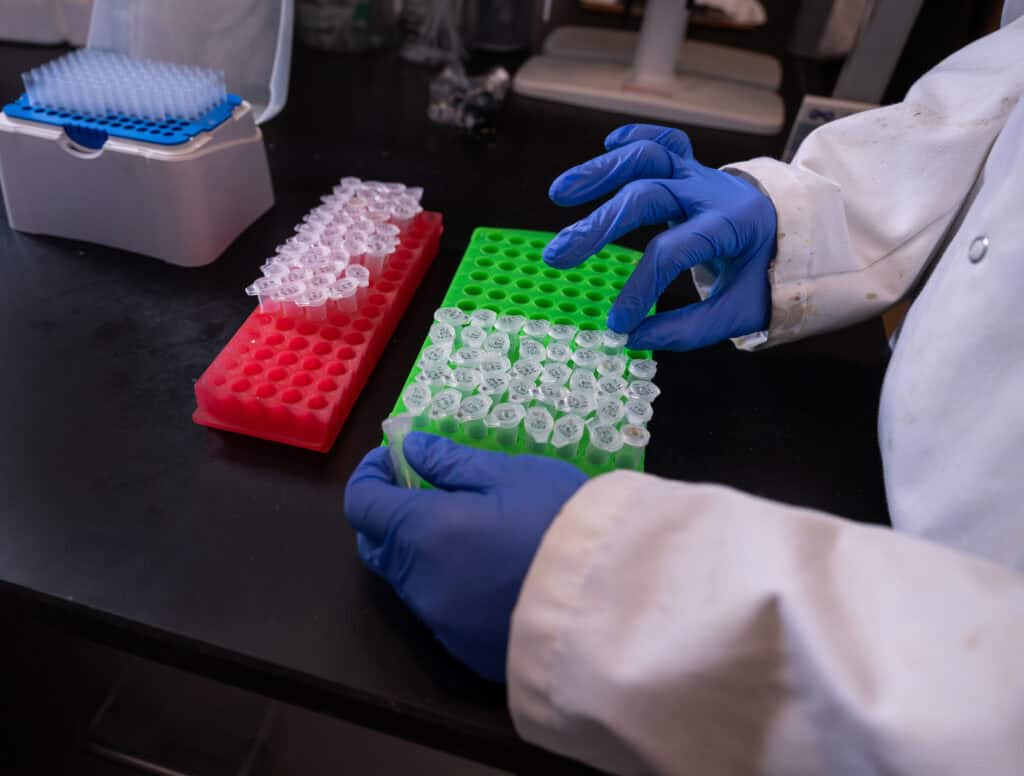
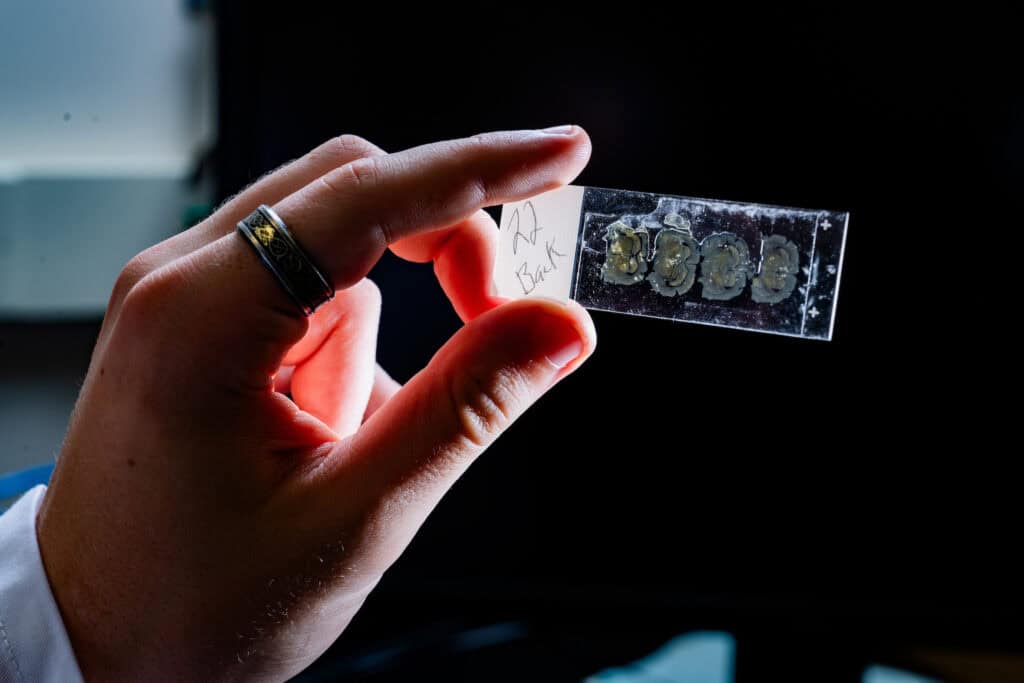
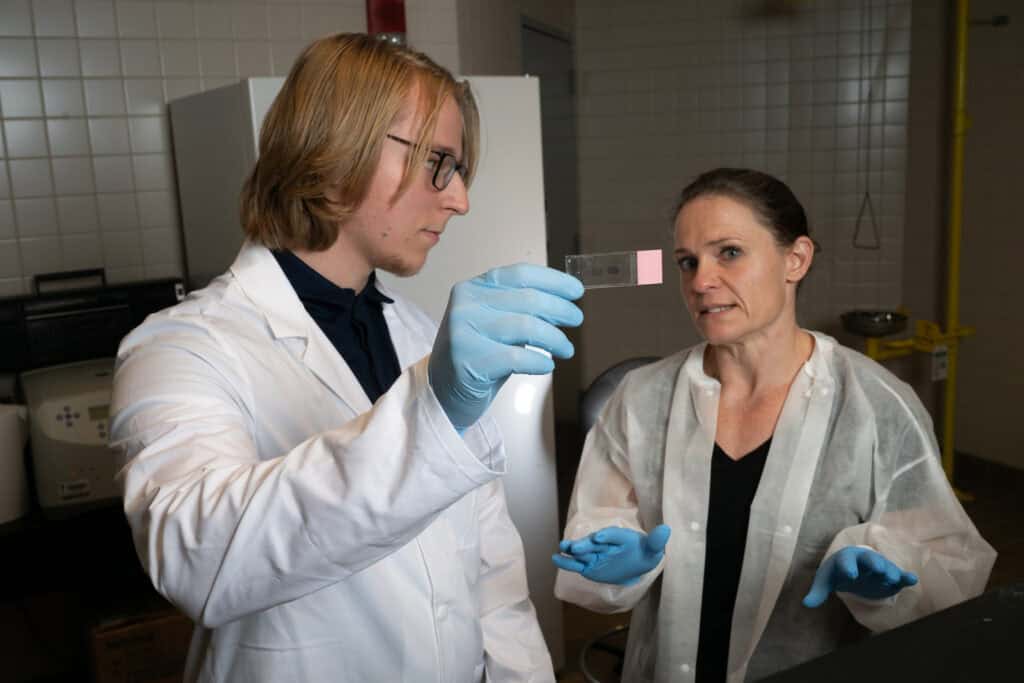
Abdullah and many of her peers have found the new major to be very research-driven. On campus, Dr. Jeffrey and her co-founder Dr. Kelly Bordner work in labs on multiple projects and students are key contributors to research.
Current research focuses include the effects of cannabis on developing fetuses, the social cooperation of specific types of fish, synapse formation, and more. Bordner says the research done in her lab attempts to answer any questions at the root of behavioral neuroscience.
“We attempt to explain the foundations of human behavior. So why do people do the things that they do? How do they learn? How do they remember? Why do we feel certain ways? How do mental illnesses develop?” says Bordner. “The behavioral neuroscience lens of that specifically tries to explain and understand human behavior and behavior at large from the neuroscience or brain perspective.”
Freshman Awurabena Ofori-Amo switched her major to behavioral neuroscience from computer science partly due to the research opportunities available. After learning about the new major during her INQ class, she wanted to take advantage of the many research prospects available on campus.
“I know Southern has a lot of opportunities, and that’s one of the reasons I’m here. Yes, the program just did start, but there’s a lot [of opportunities],” says Ofori-Amo.
Off-campus, students in the behavioral neuroscience major can do research in labs across New Haven and beyond. Abdullah says the new major has already given her many opportunities she would not have had otherwise.
“I started out working in Dr. Bordner’s lab here at Southern,” says Abdullah. “Now I’m doing an internship at Yale, which has taught me so much, both with research skills and also just knowledge. It’s really broadened my horizons a lot, and I would not have been able to do that unless I was a part of this program.”
Outside of research, the behavioral neuroscience major is breaking ground in other ways. Southern is the first public university in Connecticut to offer behavioral neuroscience as a major.
This allows students from a wide array of backgrounds to obtain a quality undergraduate education that will help them succeed in graduate school and beyond.
Jeffrey says the program prepares students for whatever they pursue next. While some students will choose to use the major as a stepping stone to medical school, others will find their niche in lab-based research.
“A lot of our students will be looking at going to graduate school, either if they’re going to be going to a professional school, like medical school, or going to get their PhD to study more in depth.” Says Jeffrey. “That being said, we’re also hoping, with our research exposure with our students during their time at Southern, that they could step out of here and get a job at either another academic lab, or they can be doing research or at a biotech company.”
Bordner says the major was created with students who are looking ahead to graduate schools in mind. For those preparing for medical school, they will be prepared for whatever doctorate or professional program they choose.
“Most of the prerequisite courses that they would be required to take for those programs are embedded within the curriculum of the behavioral neuroscience major, and we did that intentionally,” says Bordner.
The various opportunities found in the behavioral neuroscience program expose students to many career options. Abdullah says this has helped her plan her path for the years ahead.
“The great thing about this major is that it allows me to explore a lot of different career options, whether that be research industry or other applied careers. I am primarily interested in developmental neuroscience, and I would like to pursue graduate school afterward, and this is absolutely perfect for anybody that wants to go into higher education,” says Abdullah.
Abdullah, who is on track to be the first behavioral neuroscience graduate from Southern, will be crossing the stage at commencement in May, but younger students like Ofori-Amo are equally passionate about their futures in the world of behavioral neuroscience.
“I’m obsessed with the idea of consciousness. And so because of that, I would like to hopefully get into graduate school and get a PhD, or get into, like, an MD PhD program where they’re focused on research when it comes to consciousness and the brain,” says Ofori-Amo.
For those looking to study behavioral neuroscience, Abdullah encourages them to get started. Approximately 50 individuals have shown interest in joining the program for the 2026-2027 school year.
Students with a strong foundation in math, who enjoy multiple sciences and who want to learn more about why and how humans interact will find themselves at home in the program.
“It’s a very rich, interdisciplinary, applied major. You can go so many different directions with it,” says Abdullah, “you can make it your own. There’s a lot of free electives within the major as well, and I think it’s a great option.”